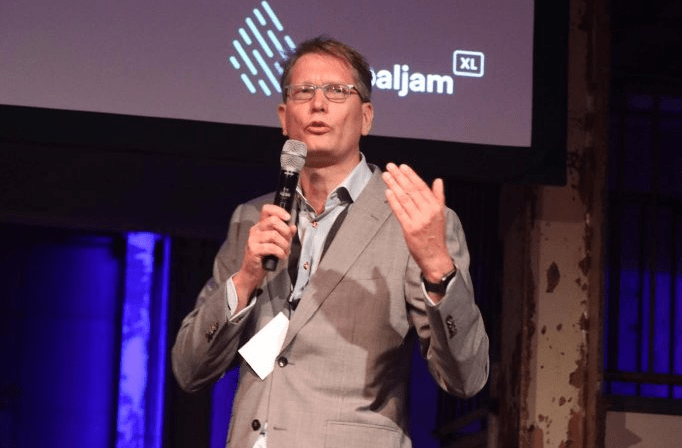
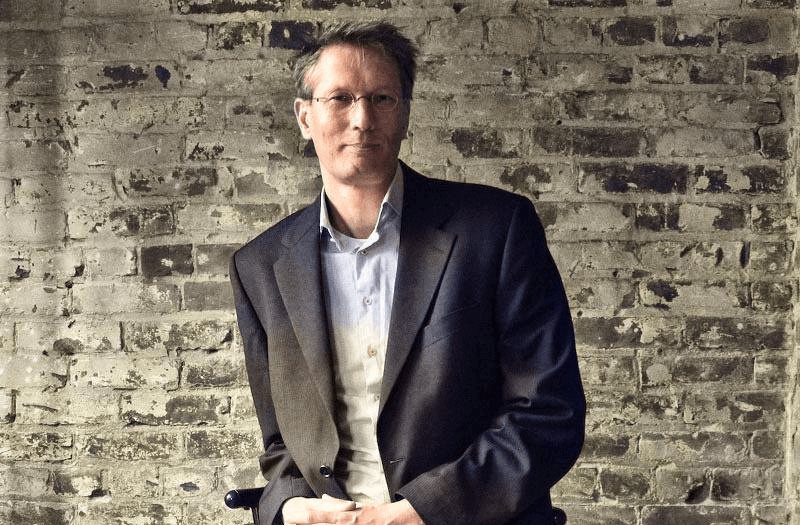
For more information about me being active in the Drupal community for the past 8+ years, check out my profile on d.o, user 188.
Search
(C) Left
This site is build on openstandards with opensource software and an openmind. That is why all content is licenced under the open content licence. except external linked images, brandnames and content of users other than bert boerland
RSS of blog posting via:
RSS of taxonomy items via: RSS of all comments:
As you might know, I am a big fan of using EyeTV as well as Plex on my mac mini hooked to my telly. Plex is the best mediacentre for the mac, EyeTV a way to view live TV on your Mac with EPG and much more.
Sometime ago I posted about integrating them, watching live or timeshifted TV on your mac within Plex on this post. Though the code is very rough and far from finished and seems to be orphaned already, I would like to suggest a cool feature.
Wath EyeTV in Plex and have Plex look in to the EGP and searches for tweets about the program you are watching, live or timeshifted. I do not watch much TV let alone live TV, but part of the joy of watching TV is seeing what others have to say about this via twitter. And watching this on a TV with live tweets updates about the program you are watching sure sounds something that TV's will have in half a decade.
Since a couple of weeks I have a nice Mac Mini (unboxing) hooked up with EyeTV to my telly so I can record, timeshift, commercial skipping and do all the other PVR stuff from my chair. Yes, I have been using MythTV the couple of years, but the box was more under maintenance then in production. So I went the easy way and went Apple, like I will do for all my client computers (still using Linux for servers!). The Mac mini is cool and I use other standard apps as well, especially Plex. I like easy and it integrates with my iPhone so I can watch recorded and live shows on my iPhone as well (picture).
Plex, iTunes, iPhoto and EyeTV make up 99% of the programs I use on my mini. And in fact, since iTunes can be access from Plex, as well as iPhoto can, I should only use EyeTV and Plex. If you do not know about Plex as a Apple user, shame on you. It is the best thing since sliced bread, including an appstore, modules, themes and a /beautiful/ user interface. And free as in open source as well.
Still, watching TV and switching between applications does not give the right usability to my girly (and to lesser extend :-), my kids). So I would really like to see EyeTV and Plex integrated. There has been lots of talk about integration, for over a year or so. But no code was ever made available. Up to a couple of weeks ago!
Yes, there is actual Open Source code that you can use to access your EyeTV recording and live TV within Plex! Read this thread at the plexapp forums!
Not that the code is very alpha and does not have any EPG integration yet. But still, this is so cool!
Here is a short install howto from the forum pages (not complete
1) Ensure Snow leopard is up-to-date - 10.6.2
2) Ensure Plex is up-to-date - 0.8.5
3) Ensure EyeTV is up-to-date - 3.3
4) Ensure Xcode is up to date -3.1
5) Ensure iPhone streaming is enabled under EyeTV>Preferences
6) Install MacPorts from http://www.macports.org/
7) Once Installed -normall diskimage- , run Terminal from Utilities>Terminal.app
8 ) At the prompt "sudo port install ffmpeg" (without quotes)
9) Typ your password
10) ffmpeg takes long to install about 30 minutes to d/l and install each component.
11) Install Imagemagick from Macports using similar command in the same Terminal "sudo port install imagemagick" (without quotes)
12) This can take another 15 minutes to install after supplying system password
13) Installed the EyeTV/Plex Plugin 0.2 (se link above) OR LATER!
14) when the plugin is installed, a cytv.app(a modification) should be opened together with eyetv. in the dock click on cytv to have this app active. then in menubar click on "EyeTV - CyTV-Install Plugin".
15) Right click (ctrl+click) on cytv in the dock, and choose "show in finder". then right click on the app and choose "Show Package Contents". navigate to Contents - Resources and rename ffmepg_custom to ffmpeg_custom_old and ffmpeg_custom_0.5 to ffmpeg_custom.
16) Unable to rename these files? Pressed Apple+I, in the Info screen at the bottom of this window is the Permissions option, change the permissions of my user on these files to read+write, I was then able to rename both files.
17) change rights with the following 2 lines in terminal (use your username instead of $USER):
This should do the trick. But if you are not that good with Unix best to wait until this is beta or production code. All I need now is an asterisk integration and I will never leave my TV :-)
There are two big trends in ICT; Service a a Service (SaaS) and Open Source Software (OSS). And I do think those two go hand in hand and are reflecting changes that are coming towards the ICT landscape. When I say "hand in hand", I do mean that they are complementary (like people are in a relationship) but also that the are in contrast of each other (like in many relationships). It is my opinion that you either outsource
(parts of your) IT activities, or build the solution yourself. You will either use a cloud to deliver your needs, or make your own cloud. It will either be service from the Microsoft's or you will have to build and manage the solution by yourself. You either well use a cheap commodity service with limited customisation to have the complete freedom to fit the software to your business objectives. Let me try to make clear why this is my opinion and how this influences your role as a user or provider of ICT services.
Recent trends have shown that release cycles of software have become shorter and shorter; to keep ahead of our competitors you have to be able to release early and often.
Release early and release often as a way to be able to quickly add new features for the future, fix problems for the current software and to prevent that software becomes obsolete ("end of life"). The perpetual beta as the new adagium. Where flickr was able to deploy during it's booming period a new codebase every 15 minutes, Microsoft was able to make a new operating 7 years. One is using the "service" (cloud) way of offering it's software, the other is using the "fat client" approach. So on one hand proprietary fat client software s facing competition from cloud based services. Sure Google Docs is not as feature rich or reliable as the Office suite of Microsoft but most agree that this is just a question of time and network reliability; in due time Google Apps will be good enough for the masses. Mind you, most if not all cloud services are proprietary and are doing well; salesforce as the most prominent example.
On the other hand, proprietary software faces problems from the Open Source alternatives. OpenOffice.org is a real competitor for MS-Office, the Ubuntu distribution beats Microsoft in many areas and MySQL is giving the absurd licence fees of Oracle a hard time. If proprietary closed source software wants to stay in business, they have to move. Not to a "long tail" niche but in the other direction, to the left side of the tail where you can offer a highly standardised yet customisable version of their product. That way they are able to release early and often and go for a low margin per product sold but sell a lot. So I do think that closed source software has to move towards a service model, away from the client into the data centre.
This means that the other trend (Open Source Software) -that has written "release early and often" written all over it- will dominate the Do It Yourself area. OSS will be used by people and companies that have time and resources to fulfill their needs via highly customisable software. You will see this first with applications that are by nature webbased; the can move to the cloud with less legacy baggage. Software with much interaction with local legacy products will follow later, much later in some case So Office Automation for existing companies will take some serious time to migrate to the cloud since hybrid solutions (some data local, some in the cloud) will be rather expensive and complex to many from security, identity and manageability point of view.
One of the webbased applications that will dominte the "DIY" will be Drupal. It i already the best Content Mangement System ("looking outside") on the market and it is moving more in the direction of the core of business processes ("looking inside"). Drupal will more and more be used as both a frontend system and a backend system; a system where you can aggregate and enrich data for internal use that can be pushed towards for example an external Drupal site.
If you follow this logic (proprietary moving towards commodity cloud service, Open Source solutions towards customisable client service) you might conclude with me that Open Surce CMS-es have nothing to fear from closed source CMS-es like sharepoint. Sharepoint will be the shell around your office data if you want to use that from a cloud perspective, Drupal will be used by enthusiast and enterprises that need more power and have more resources to kickstart and operate that power.
So some people will use an iPhone and the cloud service "Mobile me", others will build Android. Some will use digital TV solutons from their cable providers, others will build MythTV. Some will run an OpenID service themselves, others will use it from a Google/Yahoo! And some will use voicemail (the most used cloud service in the world) and others prefer a local answering machine. I, I use all kind of differtent services, cloud and local, like most people will do.
PPS: Sure, you can have Open Source "SaaS" solutions as well, for example hosted and managed Drupal instalations but it will be a niche crossover, if that makes sense to you. Also, when I say "build", it can also mean "let other build", aka buy.
PPPS: I do think that SaaS is a complete wrong term; it is a technological acronym. First, people do not want "Software" as a service, but they want a service (as a service). As long as the ICT things about acronyms like SaaS, true adoption of using a "Service as A Service" will only stall. It is time to stop the technology lingo where it should stop; at the door of the customer and think of services instead of software. Second, Software as a Service is a very limited view on what truly can be accomplished with services; it might be disk capacity from the cloud (like S3, Storage as a Service), it might be CPU capacity (like EC2, CPU as a Service), it might be housing (Rackspace as a Service), hosting (Linux box as a Service) or to give an everyday example we are used to, voicemail (Answeringmachines as a Service). Therefor I plea to stop using the term SaaS and use XaaS ("Anything as a Service") or use SaaS for the acronym "Service as a Service", whatever makes more sense to you.
If... If I would start my own company... But I won't. I do not have the skills, money, balls and most of all, I am rather happy with my current employer Dutch Open Projects. But if I would start my own company, the services would not be based upon Location Based Services, a carbon copy of free available software or "Social Networking two dot ooo". It would be based upon my hobby in combination with my "vision"
Part of my (IT) related hobby's include Drupal (the best Content Management System), MythTv (the best way to watch less junk TV) and everything Mac related (the best way to communicate with a CPU).
Combining these elements will give you nice opportunities. For example your iPhone could be your remote control for your telly:
But you could also use your iPhone as a device to watch television on; recorded streaming television based upon your preferences towards your telehone!
And these are just two simple examples; it could be expanded to controlling and integrating the Squeezebox (cheesy: WiFi to your HiFi) I own and towards all the other electric equipment in my house with X.10 (cheesy: control your house from your mouse) like Mr House does. But you will directly see two problems; all these devices and software packages act like they are the master:
they do not talk to each other
they do not provide a nice consistent user interface
In fact, most of the user interfaces these devices provide are really really bad, if you think Drupal pre4 sucked usability wise, try a MythTV distro from one year a go or even the current version of MrHouse! Now the time might not be right for my "business plan". I know that in the USA the concept of Tivo is rather normal for early adapters but here in the EU harddisk based PVR's are just catching on. It will take some time before the public sees and needs that these devices should be integrated .And by that time I am sure that our friends from RedMond have a very nice "solution" for you; "Vista Home Automation # 1984".
By not combining, not integrating, they do not give the user the option to co-related information about their house. For example, if my central system that my family would not be in the house since there are no blue-tooth telephones detected at 2:00h in the morning while the camera sensors motion, I would like to be paged, see the camera images from my iPhone and when I will not react within a certain amount of time, the system should dial out to the police. Okay, bad example, I do not want that since most likely I forgot my phone or the battery is dead and I am in the kitchen to make some milk for my son to get him to sleep. But you get the idea; a centralised place where information is gathered from multiple sources, co-related and with work-flow, action upon this information.
And by not combining, not integrating, they do not provide the user with a good user interface that is consistent and adapts (context aware) towards the client (text messaging, instant messaging, telephone, full browser etc). A key factor forsuccess beyond the usual geeks.
I would like to be able to solve these two problems, make a central place that talks to all devices and can be "smart" and provide the user with the best UI (s)he can get. Now before you state that there is such a product, I am aware of pluto. Pluto combines music (squeezeboxes), television (MythTV), voice (asterisk) and much more into a central box. See for more information their (nasal!) presentation. But they do not combine it in what I would call a "central smart box". That and the fact that they can use some competition :-)
A central smart box would be able to adapt fast, if there would be an API for a grocery shop, it will be in the software in the box within days, weeks. It would know my spending habits and my income and would swap money to places where it would get the most interest, it would read my RSS feeds and based upon time and location "read" them to me, it would know my agenda and the availability of my friends and it would do so much more that I can think of right now.
And by now, you should see why I would like to add my other hobby; Drupal. I think that a central system that acts upon actions and can do more then that could be a Content management Framework like Drupal. I know that PHP by nature would not be very good for acting as a real time broker between information, but I still would go for a Drupal solution instead of J2EE. Drupal is easier, it adapts way faster, can integrate, has a geeky loving community that probably has some of the devices I mentioned, can look beautiful, has a very small footprint and can be context aware.
I would like coin the phrase Home Service Bus, after the Enterprise Service Bus. More the Home Automation that enables a user to control electronic elements, it would be able to make decisions on its own, based upon input from my actions and the status of electronics devices. It would be a broker of information; it would be a Home Service Bus! Now let's just wait until the Gartner People catch up on this phrase in half a decade :-)
So, if I would start my own company it would be based on building this. But since I will not, you a free to make it. And -lazy as I am- I will buy it from you!
Hostname, Hardware, Purpose, OS
Tug, old p166, Webserver, Firewall, DNS, HCDP etc..., Linux (FC)
Eye, Axis 200+ camaera, embedded webcam, Linux
Fish, New barebone, MythTV box, Linux (FC)
Newborn, 3y old AMD64, Work PC, Windows XP / Linux (SLED)
Leeuw, new laptop, work laptop, Windows XP / Linux (Ubuntu)
Koe, old tecra laptop, Laptop for G/F, Linux (Ubuntu)
Toeter, Linksys WiFi router, Wifi, Modified Linux kernel
stroPDAs, HTC Windows PDA, Windows mobile
Harmonica, Squeezebox, MP# streaming client, Modified Linux kernel
IPoidium, IPOD, Mp3 client, Proprietary Apple OS
I cleaned my room a year ago and threw away all old (and I do mean OLD) hardware. Servers I dumped had some cool names; krijgertje, zalm, wigwag, duckman, Kjell to name a view.
Now my newborn machine will become my new webserver -hence making kjell redundant- once I buy myself a new IMac. Then I dont have any Windows machines left in the house, apart from the laptop from my employer.
Recent comments
1 day 5 hours ago
1 day 16 hours ago
1 day 20 hours ago
2 days 11 hours ago
3 days 19 hours ago
4 days 5 hours ago
4 days 14 hours ago
4 days 21 hours ago
5 days 10 hours ago
5 days 19 hours ago